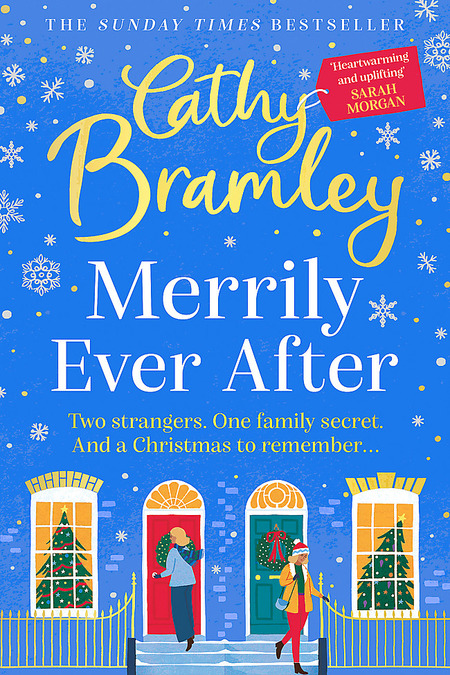
(courtesy Hachette Australia)
If you are a faithful reader of the warm and cosy romcoms written by Cathy Bramley, you will likely have read 2022’s The Christmas Project a whole year before you got anywhere near the festive joy of Merrily Ever After.
But should you have dropped your Cathy Bramley game and picked up the second novel thinking it was a standalone, the good news is that you won’t be disadvantaged because the author does a superb job of referencing the events of the first book without once making it seemed clunky and over-expositioned.
That’s a real gift; there’s been quite a few inadvertently read sequels – for obvious reasons, many publishers don’t want to make it feel onerous to pick up the book you’re holding and so don’t bang a very lour drum, or one at all, about the fact that you’re holding a story with an antecedent – which sough to catch you up with all the grace and balletic wordsmithing of a walrus bellyflopping into a shallow pool.
Merrily Ever After fortunately doesn’t conjure up any such images, with the novel seamlessly harking back to the way Merry met the love of her life, Cole, and how she has set up a business in the town of Wetherley where she has found community, friendship, love and a sense of belonging that she never had as someone in foster care.
In other words, all the good things that you dive into a festive romcom, or any romcom really, for.
‘I can’t believe this is happening,’ I [Merry] said, laughing. ‘You were right: getting married on Christmas Eve is far more exciting than the first snow of winter.’
And then I kissed my new fiancé with a passion that earned us a toot from the horn of a car.
Being able to reunite past events with current events without once feeling like you’re stitching together wholly disparate parts really helps a reader not to feel like they have inadvertently broken some sort of sequential novel consumption rule.
Feeling like you’ve missed out some secret piece of narrative richness really robs a novel of its reading pleasure but that never happens with Merrily Ever After and so you can let yourself fall into the story of Merry, an orphan and ward of the state since she was a girl, who has now found a family with Cole and the two children, Hartley and Freya, he had with his first wife, Lydia.
She’s about to say “I do” to the handsome, thoughtful, caring man of her dreams, her candle business is going great guns thanks to slots on one of the many shopping channels, and she finally feels like the sense of community she has always longer for is hers.
Her best friend Nell runs a successful nut stand in the local year-round markets, and while Merry is struggling at times with how to be a good stepmum without being a parent, since Freya and Hartley already have two of them, she is pretty much hitting out of the park on just about every heartwarming metric.
She is, as they say, winning at life.
Alas Emily, the other key character in Merrily Ever After, is not feeling anywhere near as charmed, her life staggering under the weight of some weighty family responsibilities.
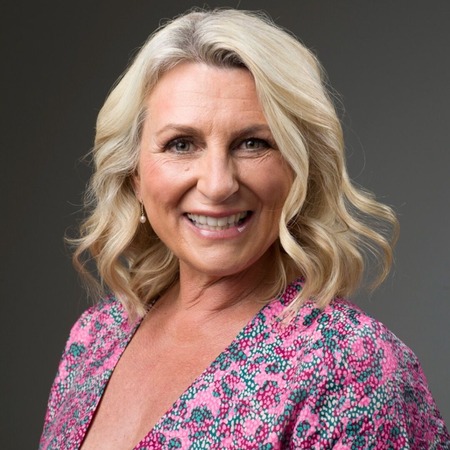
(courtesy Audible)
Emily’s dad, Ray, have early onset dementia in his mid-sixties, and while he wasn’t always around and left Emily’s mum Tina, with whom she is super close, high and dry more times than he didn’t, he is Emily’s dad and she can’t leave him to deal with his declining state of health alone.
But it’s playing havoc with her job on contract as a personal assistant to the principal at a local school, and she has no love life to speak of, and while she doesn’t resent Ray for a second, looking after him when no one else will, is weighing her down.
Things only begin to change when Ray moves into a nursing home – it’s one straight out of a fantasy and honestly if I could find one like this, I wouldn’t dread moving into assisted living when that happens sometime well down the track – and Emily not only meets lovely, warm and caring occupational therapist Will but also discovers a mysterious photo in a tin her dad zealously guards which hints that she maybe might have more of a family than she realises.
Lest all the spoilers get given away like a festive piñata swing off a Christmas tree, we’ll leave what it all means there but suffice to say, what Emily finds in that tin will change her life, and that of Merry too, and give them a lovely, sprawling found family of the sort that make reading novels like Merrily Ever After such a profoundly reassuring joy.
Maybe, just maybe, she [Emily] thought, sneaking a look at his [Will’s] handsome face, this could be her second chance to have it all.
While Merrily Ever After does feel a little too sugary and treacly at times, you can’t begrudge a story which celebrates one of the great mainstays of the festive season – community, togetherness and being with the one/s you love as Santa comes to town.
Bramley evokes how wondrously and festively good that can be with gusto in Merrily Ever After and it makes for the sort of festive romcom that really keeps the darkness of the real at bay and makes you believe in all the good things our heart wish and long for.
Not everything goes to plan and no one escapes without a few bruises, but by and large this is less a novel about the dark times of life and more of what happens when the light arrives and things begin to turn around and feel hopeful and possible again.
Again, more than that, when the darkness is absolutely banished and all you have, occasional bumps in the road aside, is a hug from the universe that says that not only will your life feel better at Christmastime but that that will sustain itself long into the new year and well beyond.
That’s the kind of festive second chances and new beginnings that fill Merrily Ever After to happy-ever-after overflowing and it makes the story of Merry and Emily and all the supportive and unconditionally loving people in their orbit a heartwarming joy to read and the sort of book for which Christmas was made.