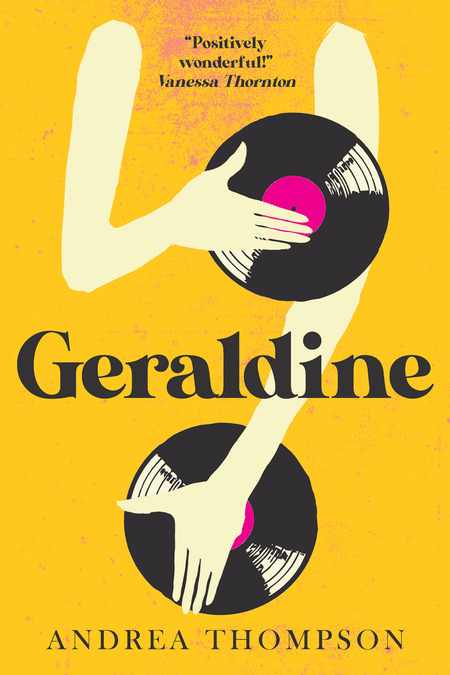
(courtesy Fremantle Press)
As I discovered fairly early in life, much of the world has very fixed and fiercely defended ideas about a “normal” person should be.
And if you don’t fit that mold, then woe betide you because you will finds yourself battling against terrifyingly intense forces that won’t take “NO” for an answer and which believe they and they alone have a lock on the boxes you need to tick to be an acceptable member of society.
If you’re a queer person, like the eponymous protagonist of Geraldine by Andrea Thompson, then you will be well acquainted with how the world can tell you on a constant basis that you are not worthwhile, and you then have two choices.
Try to fit in their straitjacket tight parameters, which pleases no one and simply makes you miserable, if “safe” (but what’s that really worth if you have effectively neutered the essence of who you are?) or, and I love that Geraldine does this, you can set out to change the world so you are accepted on your own terms.
The story of Geraldine is an inspiring one to anyone who has ever felt the world has conquered them.
At no point does Geraldine, a gusty, brave woman who decides that she will not defined by the male body into which she was born but the woman she knows deep down she is, ever give up, though Thompson also rather thoughtfully explores how much of a toll her near-daily battles take on her.
‘Well,’ said Julia, pausing to gather her thoughts, ‘I don’t really know, actually. But it’s not normal, is it?’
‘What do you mean “normal”? said Geraldine.
‘It’s not very common,’ said Julia. ‘There aren’t many people like you.’
‘There’s no one like me,’ said Geraldine.
What is wonderful about this nuanced, honest and intensely grounded novel is how Thompson demonstrates from the start that Geraldine is very aware of who she is right from the very start.
While her oddly-disengaged parents, brother, schoolmates and others see a fairly standard English schoolboy called “Gerald”, addressing him as such at every point until at least her later teenage years when she begins to defend her true gender identity, Geraldine always speaks as a female whenever she is referring to herself or discussing how she is reacting to various situations.
It’s a brilliant narrative device that firmly establishes, without any lecturing or overtly heavy messaging, that while Geraldine is technically Gerald to the world, she is definitely not in the very essence of her being.
At no stage does she refer to herself as he/him and you know right off the bat that not only is Geraldine sure of her true gender identity but she is also not willing to stay quiet about it.
One thing I deeply admired and loved as I read Geraldine was how she made it clear, often in the most natural way possible who she was; and when she came up against trenchant opposition, and unsurprisingly there’s a fair amount of it, she was not afraid of standing up for herself.
Were that we could all be that brave and at such a young age and that we didn’t recoil, even a little bit, when the world seeks to put us back into an unwelcome box of their own making.

(courtesy Fremantle Press)
Geraldine is also driven by the need to take action on transitioning even when doctors and other medical professionals disregard her.
She does find allies in her fight to be who she truly is and they are by her side when she needs them the most, but many times she has to take matters into her own hands, and when she does it, it is magnificent to behold.
That’s not to say the road is easy and there are many times when our plucky hero has to battle some fairly fearsome odds and deal with some bleak and harrowing times including an almighty bout of debilitating depression, but by and large Geraldine refuses to stop fighting and her courage and determination is an inspiration to anyone who has ever wavered in the fight to be authentically and unapologetically themselves.
What makes Geraldine really sing is that Thompson, who admits in the Author’s note and acknowledgements that the novel began as a memoir before she realised how many other gender diverse people were doing the same thing and pivoted to fictional retelling of her life, is so honest about what she went through.
It would’ve been easy to position the central character as some sort of hero prevailing always against impossible odds, and while that would have been inspiring, it wouldn’t have been true to the lived experience of so many queer people who battle hard but suffer greatly too, no matter their successes.
‘Fuck, Geraldine,’ said Janine. ‘I’m so sorry.’
On the other side of the bed, Claire held Geraldine’s hand and sobbed.
‘What are we going to do?’ said Janine.
‘Nothing,’ said Geraldine. ‘Not yet.’
It is this groundedness and a willingness to talk directly about important, salient issues without once coming across as strident or alienating which enriches every last page of Geraldine.
It feels like the story of a real person and when you’re battling to keep your head above water in a world that rather emphatically wants to drown you, knowing that you will prevail but not without some significantly existential crises and pain is oddly reassuring.
It helps you to realise that even intrepid souls like Geraldine, who gets laws changed and perspectives altered with a fierce commitment to defending her authentic self and those of many other gender diverse people, have moments so low and times so bleak they wonder if they are getting anywhere at all and if anything they’re doing has any real worth.
Knowing those dark times will be there and your journey won’t be one of endless overcoming means you can gird yourselves for battle knowing that while you won’t give up the fight and you will find some real success in your endeavours, you will things to be very dark and impossible to bear at times.
And you will emerge stronger and okay on the other side which is what Geraldine does in her eponymous novel, an outstanding character-rich read full of epic highs and a lot of quite ordinary lows which always remember s that anyone who sets out to change the world won’t always find it easy but they will succeed because they know themselves, they believe in who they are and they won’t stop until an unwilling world acknowledges and embraces the truth of who they are.