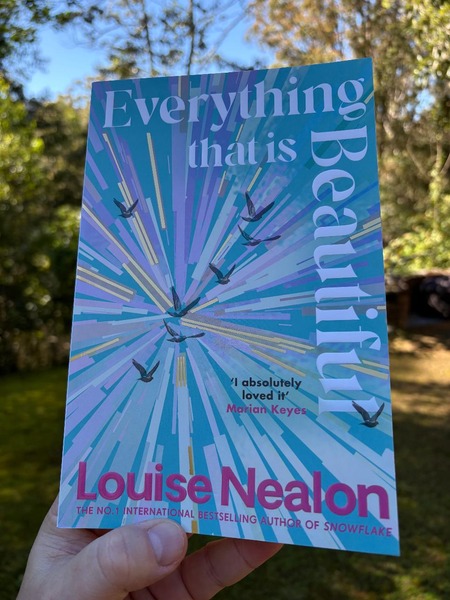
This novel was mostly read at Kalimna, Yeranda Cottages, Main Creek (Dungog) NSW, August 2026
Secrets can usually only stay secrets for so long.
Somehow, some way, what was holding them in place far away from public gaze and collective knowledge corrodes and falls away and the truth outs, unable to be held in any longer by the people who are, often times, the unwilling holders of those secrets.
In Louise Nealon’s quietly profound novel Everything is Beautiful, a title which surely has equal amounts of sincere truth and grimacing irony woven into it, the keepers of those secrets are three women who are part of the much-loved Foley family, a national treasure in Ireland thanks to the sporting celebrity of hurling champion, Liam the patriarch of the clan.
A man revered and loved the length and breadth of the land, Liam is seen as a man of many things – towering sporting prowess, philanthropic support of the game he loves and a father who has instilled a love and playing of the game into a number of his children including son Peter, daughter Kate and Niamh, who is strictly speaking the daughter of Liam’s best friend but is so much a part of the Foley family, she might as well have been born into it.
Niamh sees Liam as a father figure, a man who has loved her in a way her own family somehow failed to do, and who has sheltered, as he did his own kids, from many of the howlingly cruel vicissitudes of life.
Niamh had kept the hurley that Liam made for her when she was ten years old. She never used it for fear that it would break. Fifteen years later, the hurley remains intact, a relic of the past propped up at the end of the bed that she still slept in in hr childhood home.
But somewhere along the line, the public perfection and private warmth and inclusion of the Foleys, by any metric a close-knit and caring family, got fouled up, and while Peter and the other siblings carry on in blissful, if messy, ignorance, Niamh is the holder of the darkest secret of all while daughter Kate and mother Helen, aware of what has transpired, either feel the unending weight and the uncertainty of what to do about it, or choose to ignore it altogether, scarred by a lifetime of turning a blind eye to the truth.
It seems to be the only way to handle the corrosive secrets but as Everything is Beautiful lays bare in nuanced but excoriatingly painful detail, you can only sit on a secret like the one Niamh nurses like an open wound, and Kate and Helen pretend can be ignored, for so long before real damage is done.
Soon enough, the one bucolic closeness of the clan fractures, and while it doesn’t result in a cataclysmic break, the type that would rent asunder the golden family of Irish hurling, it doesn’t significant enough damage that Niamh ends up on the periphery of the family that would embraced her as their own, separated not by open conflict but by the quiet festering leaching of trust and closeness.
This state of affairs might have gone for years but with the wedding of one of the sisters not in the secretive loop looming, it becomes clear that this is hush-hush state of affairs is not something that can keep going indefinitely.
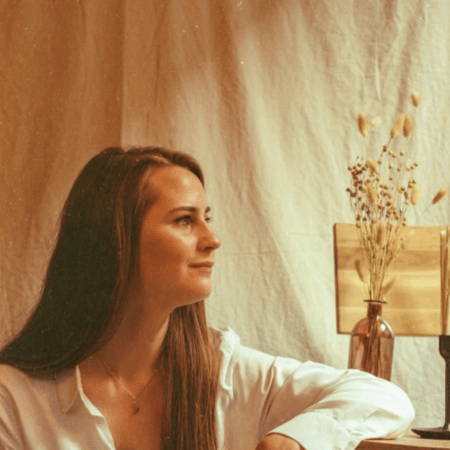
(courtesy official Louise Nealon author site)
Full of beautifully formed and finely delivered characters who clearly care for each other but who are either divided by secrets, and in the case of Helen, they number more than one, Everything is Beautiful is a touchingly impactful exploration of how we need to be connected, closely and intimately to those around us, and how an interruption in that, in this case spanning years, can cause real damage.
Helen is acting out, checking into guesthouses under the names of women she went to school with, and in the process missing major family events, while Kate, up in Belfast and living with her bisexual, possibly gay, boyfriend Ellius in an oddly dysfunctional relationship that it takes Kate a while to realise is less a sanctuary than its own kind of twisted pain.
Niamh is perhaps the most broken, estranged emotionally from her own mother Mary who resents her closeness with Helen and the wider Foley family – though that, of course, no longer what it once was – and who is caught between Peter as a brother of sorts, as a lover and the way in which the secret she holds makes it impossible for them to ever truly be together.
There is much withheld in a family that gives the impression of endless warmth and closeness and Everything is Beautiful speaks to the fact that we often choose to ignore the terrible things lurking in the very fibre of a family in favour of the kind of domestic window dressing where everyone plays a particularly stereotyped part.
Judy started when Helen slid into the pew beside her. She recrossed her legs and looked down at her clasped hands. ‘I’m sorry,’ she whispered, eventually. ‘I don’t know what’s wrong with me.’
‘That makes two of us,’ Helen said, staring down at the window in front of them.
Full of warmth and life, happiness and pains, secrets and eventual openness which finally sets everyone free, or free enough at least, Everything is Beautiful is a poignantly touching novel that folds you into the Foley family and their machinations bad and good as if you are a part of the clan yourself.
It’s a rather unique and lovely viewpoint and Nealon does an exemplary job of taking us into this lovingly dysfunctional family who are neither terrible nor perfect but rather groundedly somewhere in-between like so many of us.
The novel speaks of the very best a family can be but also the very worst and it doesn’t pretend that bridging the two is easy nor seamlessly complete; the Foleys, like the rest of the human race, are beautifully broken and though they want to be the family the rest of Ireland sees them as, they know there’s a lot more going on and a lot more to be fixed than meets the eye.
Awash in an optimistic sense that the truth will finally out and some measure of freedom and openness will be regained, Everything is Beautiful is a gorgeously enveloping read, punctuated by real moments of pain but also buoyant humour and inclusive warmth that knows that if we are truly to live in the kind of familial community we long for that we cannot allow secrets to be held, for lies to corrode and that the truth, painful though it is to utter is, must always be uttered, lest everything good once in place is lost in the process.