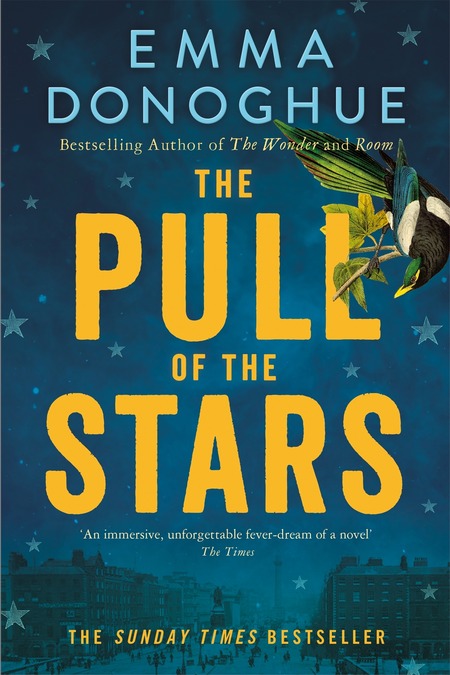
(courtesy Pan Macmillan Australia)
While we are all familiar with the slow and steady march of time, inexorably changing everything in small and big ways, it’s those dramatic, one-moment-in-time events which change everything in the blink of an eye which probably make more of an impact.
One minute life is one way, usually one borne of a good chunk of time standing, and then, dramatically, it is not, and we are left to work out what just happened and why.
The events of Pull of the Stars by Emma Donoghue initially feel to protagonist nurse Julia Power as just another in a long line of moments in the midst of world war (the first aka The Great War) and raging flu pandemic which have reshaped life in Dublin into something which is grim, fragile and almost apocalyptically sad.
Her brother Tim has returned from the trenches mute and quiet in a way that stands in stark contrast to his previous pre-war buoyant self, and Julia, who has thankfully only suffered a mild version of the flu, or “the grippe” as it is often referred to, is reconciling herself to the fact that the horrors of combat has stolen the world she knew before war and pandemic came to define it.
It seems as if time is going to keep slowly but surely eating away at what is left of life in a time which feels, reasonably justifiably if you are living through it, like it has a chilling end of the world vibe to it, until three days happen which change everything.
She murmured, We could always blame the stars.
I beg your pardon, Doctor?
That’s what influenza means, she said. Influenza delle stelle–the influence of the stars. Medieval Italians thought the illness proved that the heavens were governing their fates, that people were quite literally star-crossed.
On the day which begins what will unknowingly become the Rest of Her Life, and yes, the capitals are justified, Julie cycles to a laneway where she locks up her bike before catching public transport to the hospital where she works and where is not allowed to turn up sweaty according to the nuns who run the place.
They are a fearsome presence in this book, far from being the kindly The Sound of Music souls we might imagine them to be, enacting draconian and cruel rules which bear no real resemblance to grounded, caring humanity, perpetrating suffering upon those they are meant to shepherd and manipulating the world to fit their idea of it when what those in their care need is someone to meets them where their world actually is.
On the fateful few days which form the core of the deeply involving narrative of Pull of the Stars, Julia arrives on her ward for pregnant women with the flu to find herself in charge, and while this frees her from the unyieldingly strict control of her supervisor, it means that the weight of caring for a number of high-maintenance, deeply unwell women falls solely on her competent but weary shoulders.
She feels overwhelmed and alone until two amazing women turn up – rebel Sinn Fein member Dr Lynn and 22-year-old orphan Bridie Sweeney, a volunteer who becomes integral to Julia’s ability to keep the ward humming along successfully and the agent of some fairly significant personal change.
While the ward witness heartwarming births and sorrowful deaths, the agony of battling for life and the chance for new beginnings in the midst of an age of death and destruction of the old ways, Julie, Bridie and Dr Lynn come to make a huge difference in each other’s lives in a remarkably short and intense period of time.
Grounded though it is in the grim apocalyptic feel of the time, Pull of the Stars possesses a warm and uplifting lyrical humanity which affirms again and again, even in the some very tough and deeply distressing moments, testament to Donoghue’s beautiful verdant writing but also her ability to affectingly demonstrate that hope retains some tangible agency in a world that appears to be well and truly shorn of it.
It is not obvious at first that Bridie and Dr Lynn will have a lasting material impact on Julia.
She is low key suspicious or unsure of both at first, two unexpected entrants into her world who may upset the apple cart and change the way things are done; while Julia is not exactly a slave to the status quo, happy to question things to herself, she rarely acts on these “treasonous thoughts”, kowtowing to dogma even as she feels it slowly strangling her.
But as Dr Lynn and Bridie make their presence felt, Julia begins to realise that they are the agents of change she needs to respond to a world which is changing regardless of whether the hidebound conservatives around her want to acknowledge it or not.
Bridie frowned. This grippe’s a form of life?
Dr Lynn nodded as she covered a yawn with her hand. In a scientific sense, yes. A creature with no malign intention, only a craving to reproduce itself, much like our own.
Steeped in a world which is undergoing violent charge on a number of fronts, Pull of the Stars is the sort of novel which is actually a clarion call to challenge those who try to hang onto a present which is already dead and buried and which has no chance of being resurrected, no matter how valiantly its supporters and believers will it.
Julia is predisposed to embrace this change, though she doesn’t fully appreciate it until sometime well into Pull of the Stars and it’s her journey from quiet adherent to the established order to someone who finally voices her disquiet at the uncaring injustice and cruelty of the world, and the realisation that she is, in fact, a subversive outlier to the mainstream, professionally and personally, which really moves you.
Even more so, because it is the awakening of who she truly is, something Julia is aware she needs until it happens, and the joy and resolve which seizes her and impels her to action is heartwarming and enlivening even as it takes place in the midst of incalculably tragic loss.
There is much that is sad and mournful and full of grief and pain and loss in Pull of the Stars, which occupies a time full of change and violent disruption, but this transcendentally beautiful novel also dares to gaze beyond the worst of things to see the best of things lurking just beyond the corner, and while the journey won’t happen without more pain, it will be the making of Julia, and you suspect anyone daring enough to stare into the maw of terrors of life, and rather than yielding to quiet victimhood, stand up to it, make a statement and let the chips fall where they may.