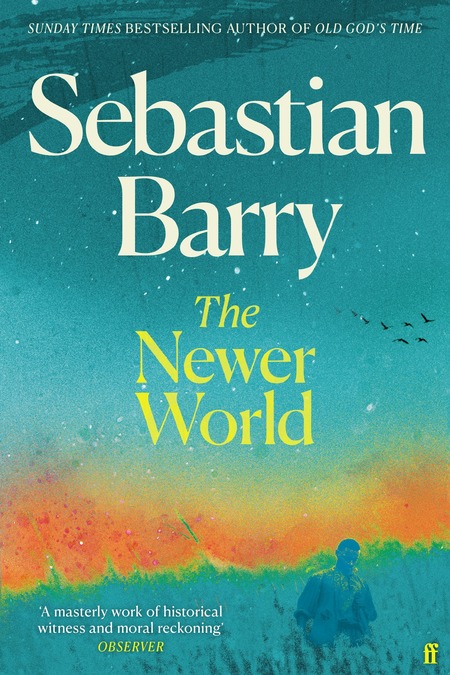
(courtesy Allen & Unwin)
Whether we’re reading a weight tome on a certain long ago civilisation or epoch, or while hearing historian hold forth on their particular area of specialisation, it’s easy to think of history as a series of unassailable truths assembled carefully to present an unquestioningly factual take on fairly straightforward events.
But as anyone with even a modicum of a questioning soul or inherent curiosity would know, history is rarely that unfailingly objective and it is often the end result of one person’s quite subjective interpretation of evidence which might seem neatly opne and shut but which is always influenced by the person who left it lying around to be found.
Sebastian Barry might not be an historian but he is a highly-regarded and undoubtedly gifted novelist who knows that while history might seem to be the arbiter of all truth when it comes to the events of the past, that it is heavily influenced by the people who lived it and by those interpreting the lives of those people in the modern day, and that the imagined perspective of someone from a particular area, no doubt drawn from facts on the ground, can prove just as valuable.
In his latest novel, The Newer World, Barry takes into the life on Tennyson Bouguereau, a Black man born, he thinks at least, in 1840, in West Tennessee where the old plantations of the South still hold sway, where slaves are nothing more than casually disposed of or mercilessly abused possessions and life has very little in the way of self-determination to those who are not white.
‘Tennyson, Tennyson,’ she said, ‘you don’t die yet,’ she [Rosalee] said, like she has her finger on the page of some story.
I felt like someone had rammed a block of wood into my throat. My thoughts were for Luther. If we were quick we might rescue him. We went stumbling after. The woods were silent now.
I found Luther hanged, and dead, stone dead, and the soldiers gone. I cut him down.
Tennyson is devoted to his sister Rosalee, and after they are sold to the neighbours, the Mangans, of their first owner, the diabolically awful Colonel Playfair – like many of his era, he is all airs and graces and civilisational trappings on the outside but outright cruelty and abhorrent bigotry otherwise – they are sent on a course which wholly challenges everything they have known up until this point.
While Tennyson does not have much going for him socially in an age when Black people need papers to go anywhere and can be refused entry to buildings and trains even when they have the requisite permissions, he is smart, loyal and a gifted singer and it is this gift which leads him, with the back of a local lawyer of some means, to a religious school in Nashville where it is expected he will be educated, sing and partake of the finer Christian things in life.
It would seem that his life has been reborn and remade and that it will all be smooth, socially approved sailing from this point on, but life is rarely that easy or straightforward, no matter who you may be, and Tennyson discovers that quite markedly when a trip to Victorian England, where he and his fellow choir members, including the lovely Minnie, are feted rather than reviled, a revelation of sorts for people long used to be treated as inferior nothings.
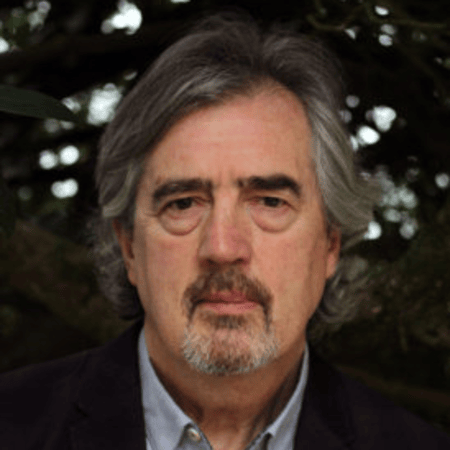
(courtesy Penguin Random House (c) Hannah Cunningham)
While you could think this might propel Tennyson to embrace more of a world which could shift his station in life, or at least how it is perceived, that’s not what happens, and much of The Newer World is about what happens when life defies easy categorisation or expected trajectories and goes off to places no one is expecting, least of all the person living it.
Told with a poetic heart and lyrical expression, The Newer World is a beautiful novel which knows the power of a story and how the truth of lived experience can be every bit as powerful as an historical recounting of the time, or at the very least, a persuasive augmentation to it.
Tennyson is a man driven, when all is said and done, by following a strong moral compass, and while he could choose a relatively easy, though still heavily constrained life, of love, music and cultural acclaim, he is not the sort of person to do that.
Throughout the beautifully told wonders of The Newer World we see him choose friendship and loyalty over romantic love, devotion to family over a stellar career or glittering opportunity and a life of service in the military where his ability to choose, such as it is, is shorn still further from him.
In so doing, we are shown what life is like for a man whose options are few but who does mighty things with those he has at his disposal.
The liveryman took our horses and then an old Indian man there said we could rest up in the hayloft. So that’s what we did. Young Johnson disappeared and we slept the sleep of good conscience, even in the hard casings of our uniforms. All around us was the roaring town, but we didn’t go out to it. We wanted to live.
You can’t help but have a huge amount of admiration and love for the person of Tennyson Bouguereau.
Time and again in a world where entrenched attitudes of race and social standing fail to be shifted even by the transformatively seismic changes wrought by the Civil War, and where laws are disregarded if they don’t suit the people enforcing them, we see him choose the better and more self-sacrificial of things over the easy, the self-serving and the convenient.
Shedding an unflattering spotlight on a society too long poisoned by hatred and bigotry to wash itself too clean, too cleanly, if at all, The Newer World is a vibrant look at a society which the history books tell us should have been forever changed by a Civil War which sought, in part, to eradicate the evils of slavery.
The world is rarely that simply and the gift of The Newer World is that takes assumptions such as the idea that slavery disappeared overnight and manifestly makes the sobering case that it did not; that while laws passed in Washington D.C. ushered in a new age on paper, they failed, at least immediately and often not at all, to people on the ground like Tennyson and Rosalee.
A testament to the power of people to survive against a bewildering host of odds, The Newer World is a beautifully, engrossingly written work, an incisively clever exploration of the ability of someone like Tennyson to craft a life in defiance of the odds (even if it remains soiled by disappointment, grief and sadness) and to lose much along the way and yet to keep going in a world where history and personal experience jostle for veracity and truth and an arresting sense of time and place.