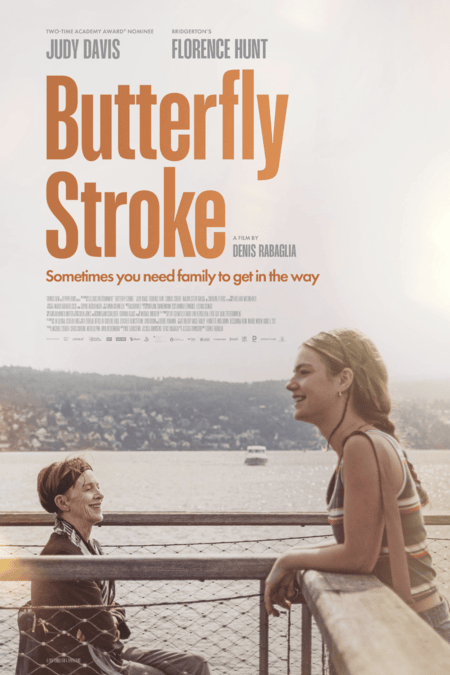
(courtesy IMDb)
There are a number of key inflection points in life but surely one of the most portentous and meaningful is when we near the end of it and death comes into the equation.
Well, actively, at least; it’s always there, of course, and ignoring it is all but impossible ultimately but through our lives, many of us keep it wilfully at bay, focusing understandably on the act of living and all the joys and colour and vivacity it often brings.
But at some point, we can’t put off the inevitable, and big questions have to be asked and answered which is where we meet Ruth Hibbertson (Judy Davis in customarily superb form) who is at her retirement ceremony, full of the usual well-intentioned but ultimately meaningless platitudes, when she suffers an episode of some kind.
It turns out that the cancer which had been progressing relatively slowly have picked up the pace and Judy finds herself faced with a dilemma which she very quickly answers, in customary non-nonsense fashion by putting her house on the market, settling her affairs and taking for Switzerland to take advantage of the country’s status as a haven for voluntary assisting dying procedures.
Butterfly Stroke races out of the gates with a bang, beginning much as it means to go on, reflecting Ruth’s no-bullsh*t approach to life which deprioritises sentimentality and puts getting the job done, yes, even when it means ending her own life, firmly on and high up the agenda.
There’s no sign of any family rushing to stop the once champion swimmer whose promising career came to an abrupt half when she fell pregnant as a teenager and was forced by her father to keep the baby and forgo her dreams of Olympic glory in favour of getting a job to support her and her daughter.
No sign that is until she rings her estranged granddaughter Lori (Florence Hunt), a promising women’s football player, who is horrified that her granny, with whom she used to holiday until that all stopped for some reason (the reason why is one of the film’s reveals later on) is planning to exercise her right to die on her own terms.
What follows when Lori turns up is some feistily buoyant comedy as two iron wills and uncompromising personalities go head-to-head with Lori absolutely determined that Ruth is coming back to the UK alive with her, while Ruth is equally and unyieldingly committed to her plans to exercise the right to choose how she leaves this life.
One of the most touching scenes in Butterfly Stroke comes when we discover that Ruth’s stubbornness has less to do with her iron will personality, though that is most definitely in play, and more to do with a traumatic event as a teenager, one that cemented in her the need to always choose what happens to her.
It’s an understandable reason for acting as she does, and it does eventually soften Lori’s fervent opposition but not before the two have come to emotional blows even as they messily move to an important and life-changing for both of them reconciliation and mutual understanding.
To say much more about the big reveals in the final act would be to do this finely calibrated and beautifully nuanced film – do not mistake a film crackling with emotional energy and fraught outlooks as incapable of giving its characters time to challenge each other, grow and develop and eventually reach the most crucial of all compromises, just short of when Ruth will be shorn, by choice, of the ability to make any more of them – a grave disservice.
Butterfly Stroke is achingly beautiful and touching, and while it is full of snapping dialogue and moments of warmth and hilarity that come even as the two women tussle for the higher ground (we know who will win but god bless Lori for trying), it also knows how to inhabit its quieter moments.
They are given time to breathe and to ruminate, which is important because what Butterfly Stroke is ultimately about is what happens when a granddaughter finally gets to know her grandmother fully and without reservation and discovers that many of the positions she held as simply no longer tenable.
That sounds you hear are assumptions tumbling and perspectives shattering for Lori who, buffeted by her own great parental losses and rejections and isolating estrangements, comes to understand, likely for the first time that life is far for simple, especially for Ruth who has masked deep hurt and palpable loss of agency at a critical point in her life behind a prickly facade born of the need to ensure that she is never put in a powerless position again.
Lori sees this as her grandmother being cruelly emotionless at times but as Ruth and she lower the barriers and get to know each other better, she comes to appreciate that it was Ruth’s only meaningful way of defending herself and nurturing herself in a world where great wrong was done to her and no one, not even her father, came to her rescue.
So much comes out at the end of life, and this is on softly heartbreaking and quietly moving display in Butterfly Stroke which manages to reshape relationships, break and heart hearts and bring everything else to a point that everyone can live with (ironic given what Ruth has in mind) before its expected but deeply affecting end.
Sure, Ruth’s crash-or-crash-through approach comes with some messiness and wrong turns, such as when she ignores all the protocols surrounding the right-to-die organisation of which she is a member and comes close to imperilling the goal which is her last big choice she will ever make and vitally important for a whole host of self-agency reasons, but ultimately it serves her well, bringing Lori on board and ensuring that she ends her life on her terms, an act of self-determination she was denied in her youth.
Funny and harrowingly dark in equal measure but ultimately uplifting despite its grave subject matter and final act, Butterfly Stroke is a beautiful piece of moviemaking, held aloft by fine performances, a thoughtful screenplay by Nat Luurtsema, Jessica Townsend (who came up with the story) and Denis Rabaglia (who directs with empathy and assurance) and a message which is never heavy-handed but always hits home, asking all of us what would matter to use as we near the end of our lives and would we have the courage, as Ruth ultimately does, to live it out.